Forged in Plurality: How Sainik School's Radical Integration Model Produces America's Most Effective Multicultural Leaders

Photo: diverse professional team collaboration office leadership multicultural, via images.vexels.com
The Classroom No Business School Can Build
When Arjun Mehta arrived at Sainik School Cadet College in Pune at the age of twelve, he shared a dormitory with the son of a retired army havildar from Nagaland and a boy whose family ran a tea stall in rural Rajasthan. He came from a comfortable upper-middle-class household in Pune. Within a semester, those distinctions had dissolved — not through policy mandates or sensitivity workshops, but through shared discipline, shared meals, and shared consequence.
Today, Mehta serves as Vice President of People Operations at a mid-sized technology firm headquartered in Austin, Texas. When asked how he approaches the company's diversity and inclusion mandate, his answer is characteristically direct: "I don't approach it as a mandate. I approach it as a baseline assumption."
That distinction — between institutional compliance and internalized practice — is precisely what separates a growing cohort of Sainik School alumni from their peers in American corporate leadership.
What Integration Looks Like When It Isn't Performative
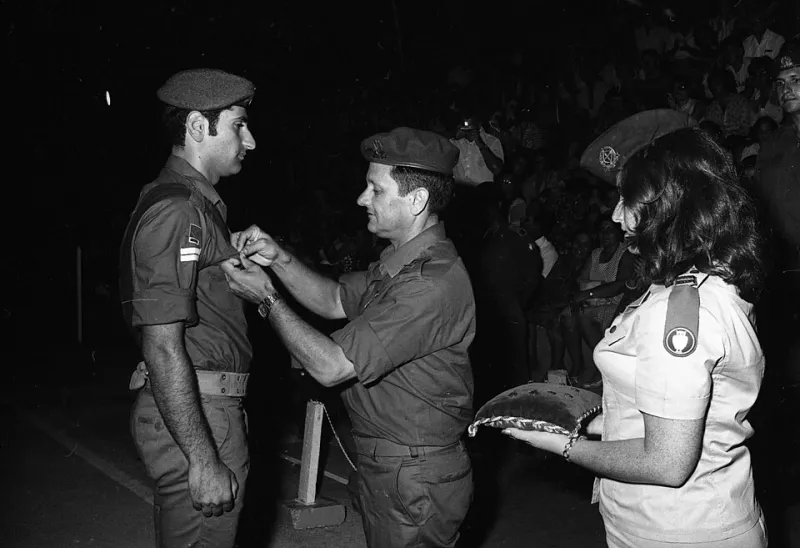
The Sainik School system, administered across India under the aegis of the Ministry of Defence, was established in 1961 with a specific mandate: to prepare young men from every corner of India — regardless of economic background, linguistic heritage, or social standing — for entry into the National Defence Academy. From its inception, the model demanded genuine integration, not as an aspirational value, but as an operational necessity.
Students from fishing villages in Kerala shared study halls with the sons of senior civil servants from Delhi. Boys who had never owned a pair of shoes before enrollment sat beside classmates whose families employed domestic staff. The institution didn't celebrate these differences with awareness campaigns. It subordinated them to a common identity forged through rigorous shared experience.
This is a critical distinction for American executives who have grown accustomed to diversity programs that catalog difference rather than transcend it. Sainik School alumni describe their early formation not as an exercise in tolerance — a word that implies endurance — but as an exercise in genuine interdependence. You learned to rely on your batchmate because your performance, your standing, and in some drills your physical safety, depended on his competence. His background was irrelevant to that calculus.
Case Study: Navigating Diversity at Scale
Priya Subramaniam, a Sainik School alumna who later attended the National Defence Academy before transitioning to a civilian career in supply chain management, joined a global logistics firm in Chicago eight years ago. The company had recently completed a significant acquisition that brought together workforces from three continents, with pronounced friction emerging between legacy American employees and newly integrated teams from Southeast Asia and Eastern Europe.
Where her colleagues reached for HR frameworks and structured mediation protocols, Subramaniam drew on something older. She reorganized her department into mixed-background project clusters and assigned shared accountability metrics — not individual performance reviews — as the primary basis for quarterly evaluations. The approach mirrored, almost precisely, the structure of a Sainik School house system, where collective performance determined collective standing.
Within eighteen months, her division reported the company's highest cross-functional collaboration scores. More significantly, voluntary attrition among non-American employees in her department dropped by thirty-one percent while the company average continued to climb.
"I didn't invent anything," she said in a 2023 panel discussion hosted by a Chicago-area business leadership forum. "I just remembered what already worked."
The Structural Advantage American Firms Are Beginning to Recognize
Across sectors — from healthcare administration in Houston to financial services in New York — a pattern is emerging. Hiring directors at several Fortune 500 companies have begun noting, in both formal assessments and informal conversation, that candidates with Sainik School backgrounds demonstrate a particular fluency in what organizational psychologists call "psychological safety across difference." They do not merely tolerate heterogeneous teams; they appear to architect them instinctively.
This is not a soft skill. In an economy defined by distributed workforces, cross-border partnerships, and increasingly complex stakeholder environments, the capacity to build genuine cohesion among people of disparate backgrounds represents a measurable competitive advantage. McKinsey's now-frequently-cited research on diversity and financial performance points toward this conclusion, but it rarely asks the more fundamental question: where do leaders who actually execute on this capacity come from?
The Sainik School model offers a compelling, if underexamined, answer.
Why Exposure Alone Is Never Enough
It would be a mistake to reduce the Sainik School advantage to simple demographic exposure. American universities have long enrolled diverse student bodies without producing leaders who demonstrate proportionally greater cross-cultural effectiveness. The variable that Sainik School introduces is not diversity of enrollment — it is intensity of shared experience under conditions of genuine accountability.
Cadets did not merely encounter people different from themselves. They were made responsible to and for those people in ways that carried real stakes. A cadet who failed to support his batchmate during a night drill did not receive a lower participation grade. He faced the judgment of his peers, his house, and his own conscience. The feedback loop was immediate and personal.
This is the dimension that corporate diversity training consistently fails to replicate. Awareness, without accountability, produces recognition of difference without the instinct to bridge it. Sainik School alumni carry that instinct because it was earned, not instructed.
An Institutional Model Worth Studying
For American institutions — whether military academies, elite universities, or corporate leadership development programs — the Sainik School model presents a serious challenge to prevailing assumptions about how inclusive leaders are made. The answer, it appears, is not through curriculum or compliance frameworks, but through structured interdependence at a formative age, sustained over years of shared consequence.
The alumni of this institution who now occupy leadership positions across American industry are not diversity advocates in the conventional sense. They are something more useful: leaders for whom the integration of difference is not a project to be managed, but a competency so thoroughly internalized that it no longer requires a name.
In an America still working through the genuine complexities of building cohesive, high-performing diverse organizations, that distinction is worth more than most leadership programs are willing to admit.