Beyond the Handshake: How Sainik School Alumni Networks Deliver What MBA Associations Only Promise
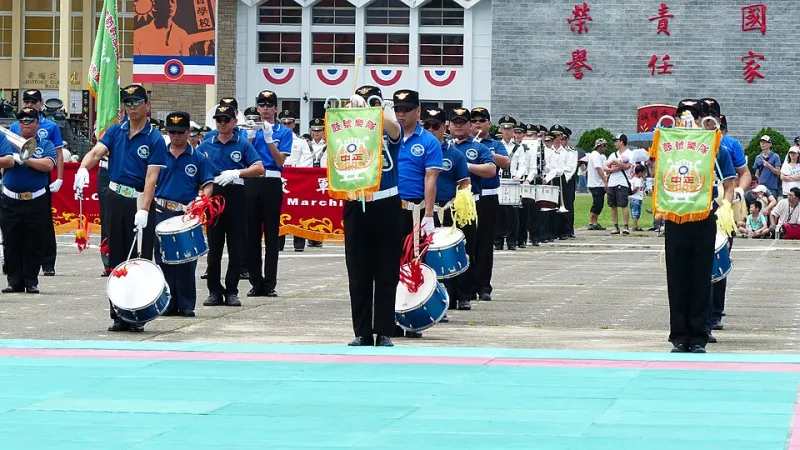
Photo: 玄史生, CC BY-SA 3.0, via Wikimedia Commons
Every spring, thousands of newly minted MBAs from Harvard, Wharton, and Stanford step into the professional world armed with elite credentials, polished networks, and the implicit promise that their alumni associations will open doors for decades to come. The reality, as many of those graduates quietly acknowledge years later, proves more modest. LinkedIn connections go cold. Regional chapter events draw thin crowds. The warm introduction that was supposed to materialize never quite arrives.
Contrast that experience with what Sainik School graduates consistently describe: a network that does not merely persist but actively intensifies with time. Former classmates who served in different branches of the armed forces, built careers across three continents, and accumulated decades of divergent experience still operate with a sense of mutual obligation that strikes outside observers as remarkable. The question worth asking — particularly for American institutions invested in understanding elite talent development — is not whether this difference exists, but precisely why it does.
The Structural Flaw in Business School Bonding
To understand the Sainik School advantage, it helps to examine the foundational mechanics of how MBA cohorts actually form. Students arrive at business school as adults, typically in their late twenties or early thirties, with established identities, professional histories, and social circles already in place. The two-year program is intellectually rigorous and socially intensive, but it layers new relationships atop a personality that is already fully formed. The bonds that result, while genuine, are fundamentally transactional in origin — people meet because they share a classroom, a case competition, or a recruiting season.
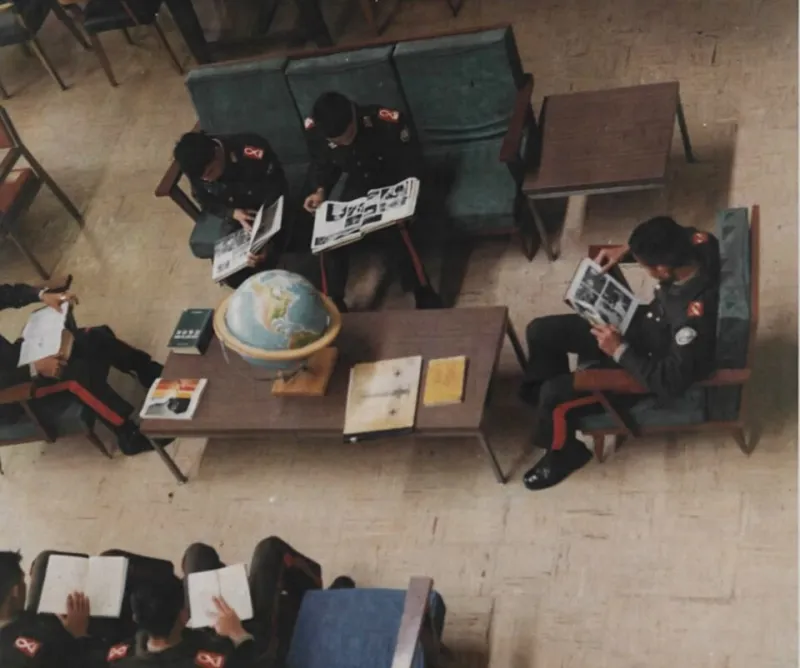
Sainik School operates on an entirely different logic. Students arrive as adolescents, often between the ages of eleven and thirteen, at precisely the developmental moment when identity, values, and social instincts are being forged rather than merely refined. The institution does not simply teach alongside that process — it becomes the environment within which the process occurs. Shared dormitories, predawn physical training, regimented schedules, and a culture of collective accountability mean that the relationships formed are not incidental to the educational experience. They are inseparable from it.
This distinction matters enormously when those alumni enter professional life. The MBA graduate who calls a classmate for a referral is asking a favor from someone he studied with. The Sainik School alumnus making the same call is reaching out to someone who, in a very real sense, helped shape who he is. The psychological weight of those two interactions is not remotely equivalent.
Mentorship Density and the Obligation to Reciprocate
Researchers who study alumni network effectiveness often focus on what sociologists call network density — the degree to which members of a group are connected not just to a central hub but to one another across multiple nodes. High-density networks produce more robust career outcomes because information, opportunity, and advocacy circulate more freely and reach more people more quickly.
By this measure, Sainik School alumni communities consistently outperform their business school counterparts. The reasons are structural. A student who spends formative years in a residential military school does not simply know his immediate classmates — he knows their seniors, their juniors, and the institutional traditions that connect generations of students across decades. The school itself functions as a living archive of relationship capital, with each graduating class inheriting obligations to those who came before and responsibilities toward those who follow.
This intergenerational dimension is precisely what most MBA alumni associations fail to replicate. Business school cohorts are largely horizontal — graduates relate most naturally to those who graduated within a few years of themselves. The vertical dimension, the sense that a 1985 graduate has a genuine stake in the success of a 2010 graduate simply because they attended the same institution, is structurally weak. At Sainik Schools, that vertical investment is not an aspiration. It is a cultural expectation.
What American Executives Are Observing
Across corporate America, talent professionals and senior executives who have worked alongside Sainik School alumni are beginning to articulate something they have long observed but struggled to quantify. These individuals do not simply network — they sponsor. They do not merely make introductions — they advocate. When a Sainik School alumnus recommends a former schoolmate for a position, that recommendation carries a credibility premium that reflects years of observed character rather than a semester of shared coursework.
Several American firms operating in sectors with significant US-India strategic overlap — defense technology, infrastructure finance, and geopolitical consulting among them — have begun recognizing this dynamic as a competitive asset. Hiring a Sainik School graduate, in certain contexts, means gaining access to a network of individuals who have spent careers building trust across military, governmental, and commercial domains in ways that conventional professional networks simply cannot replicate.
The mentorship that flows through these communities is also qualitatively different. It is less focused on transactional career advancement — the job lead, the LinkedIn endorsement — and more oriented toward what might be called character stewardship. Senior alumni who mentor younger ones are not merely helping them climb a ladder. They are helping them navigate the ethical and professional complexities of careers in which institutional reputation and personal integrity are understood to be inseparable.
Rethinking What Alumni Loyalty Actually Means
American institutions that take alumni engagement seriously — and most elite universities and business schools invest heavily in this area — tend to measure loyalty through donation rates, event attendance, and volunteer hours. These are reasonable proxies for institutional affiliation, but they measure attachment to an institution rather than investment in one another.
The Sainik School model suggests a different and arguably more durable form of alumni loyalty: one oriented horizontally and vertically across the network rather than primarily back toward the institution. Graduates do not merely feel grateful to their school — they feel responsible for each other. That sense of responsibility does not require an annual fund campaign or a reunion weekend to activate. It is ambient, persistent, and remarkably resistant to the attrition that gradually hollows out most alumni associations.
For American professionals seeking to understand why certain international talent communities punch above their weight in terms of career cohesion and mutual advancement, the Sainik School network offers a compelling case study. The lesson it teaches is one that no business school curriculum has yet found a way to deliver: that the deepest professional loyalty is not built in classrooms or case competitions, but in the years when character itself is still being formed.
The handshake that matters most, it turns out, is the one that happens before anyone knows what it will eventually be worth.