Steady Under Fire: Why America's Top Crisis Management Teams Are Seeking Executives Forged in India's Military Academies
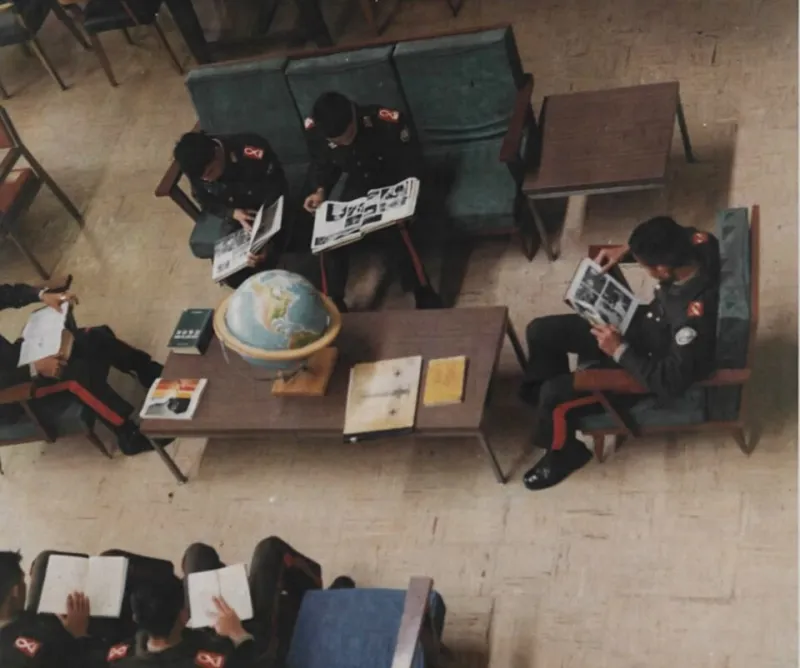
Photo: SP4 Wilkinson, Public domain, via Wikimedia Commons
When a major logistics firm operating out of Houston found itself paralyzed by a ransomware attack in the spring of 2022, its newly appointed Chief Operating Officer did not reach for a consultant's playbook. Instead, Vikram Nair — a Sainik School Sujanpur Tira alumnus who had spent his formative years navigating live military exercises and simulated combat scenarios — began executing a response protocol that his team described as almost instinctive. Within seventy-two hours, the company had restored critical operations, communicated transparently with its board, and established a containment perimeter that limited financial exposure to a fraction of early projections. His colleagues were struck not merely by the speed of his response, but by the quality of his composure.
"He never appeared to be reacting," recalled one senior director present during the crisis. "He appeared to be executing."
That distinction — between reacting and executing — sits at the heart of what Sainik School alumni bring to American boardrooms and executive suites during periods of acute organizational stress.
The Architecture of Pressure-Tested Decision-Making
Sainik Schools, established across India under the auspices of the Ministry of Defence, were designed with a singular purpose: to prepare young men for the rigors of military officership. What that mission produced, almost as a byproduct, was a generation of individuals trained to make consequential decisions under conditions of incomplete information, physical exhaustion, and institutional accountability.
The curriculum does not merely expose students to stress. It systematically teaches them to process it. From early morning physical drills conducted regardless of weather or personal circumstance, to command exercises in which cadets are evaluated on their ability to lead peers through adversarial scenarios, the school environment functions as a continuous laboratory for executive function under duress.
Dr. Anand Krishnamurthy, an organizational psychologist based in Chicago who has studied military-to-corporate leadership transitions, argues that this distinction matters enormously in a professional context. "Most MBA programs teach crisis management as a framework," he noted in a recent interview. "What Sainik Schools teach is crisis metabolism — the physiological and psychological capacity to remain cognitively functional when everything around you is deteriorating."
This metabolic resilience, as Krishnamurthy terms it, has become one of the most sought-after qualities in executive talent acquisition circles, particularly as American corporations confront an era of compounding disruptions: supply chain fractures, cybersecurity threats, geopolitical volatility, and the persistent reputational hazards of the social media environment.
From Cadet to Crisis Commander: Alumni in Action
The case of Vikram Nair is not an isolated data point. Across industries and organizational scales, Sainik School alumni are emerging as the steady hands that organizations reach for when circumstances deteriorate.
Priya Sehgal, a graduate of Sainik School Kapurthala who now serves as Vice President of Risk and Continuity for a mid-sized financial services firm in New York, describes her school training as the foundational layer beneath every professional competency she has subsequently developed. "At Kapurthala, you were never allowed to treat a problem as someone else's responsibility," she explained. "The culture was radically ownership-oriented. If something went wrong on your watch, you were expected to address it, document it, and present a corrective framework — not deflect it."
That accountability architecture, she argues, is precisely what separates her approach from colleagues who received their leadership formation in traditional academic settings. "Business school teaches you to analyze a crisis after the fact. Sainik School trained me to contain it in real time."
This pattern of direct ownership during organizational emergencies appears consistently across alumni narratives. Rajan Mehta, who attended Sainik School Rewa and currently leads enterprise resilience for a technology company in the San Francisco Bay Area, credits his cadet training with equipping him to manage the simultaneous pressures of stakeholder communication, operational triage, and team morale maintenance during a product liability crisis in 2021 that threatened to unravel years of brand equity.
"The military framework teaches you that in a crisis, three things must happen concurrently: you must stabilize the immediate situation, you must communicate with authority up the chain, and you must maintain the cohesion of the people around you," Mehta said. "Most executives are trained to handle these sequentially. I was trained to run them in parallel."
What the Recruiters Are Noticing
The talent acquisition community has begun to formalize what was previously observed only anecdotally. Several executive search firms with practices in crisis leadership and organizational resilience have begun explicitly seeking candidates with military or paramilitary educational backgrounds, and Sainik School alumni are increasingly appearing in that pipeline.
One senior partner at a retained search firm specializing in Fortune 500 risk leadership — who requested anonymity given client confidentiality obligations — described the shift plainly: "We used to treat military background as a nice-to-have. Now, for certain roles, particularly Chief Risk Officer, Chief Security Officer, and business continuity leadership, it has become a genuine differentiator. And within that cohort, the candidates who came through India's military school system bring something distinctive: they have the military mindset, but they also have deep institutional academic formation and, increasingly, global business experience."
The convergence of those attributes — disciplined psychological formation, rigorous academic preparation, and cross-cultural professional fluency — has positioned Sainik School alumni as a particularly compelling talent profile for American organizations operating in complex, high-stakes environments.
The Institutional Takeaway
For those within the Sainik School alumni community and the broader network of institutions that support military education in India, the growing recognition of alumni in American crisis leadership roles carries a significance that extends beyond individual career achievement. It represents a validation of the foundational thesis upon which these schools were built: that character formed under genuine adversity produces leaders capable of serving not merely in uniform, but in any arena where the weight of responsibility is real.
The boardrooms of American corporations are, in their own way, theaters of consequence. The executives who perform best within them during moments of crisis are those who were taught, long before they ever held a professional title, that composure is not a personality trait. It is a discipline — one that must be practiced, tested, and earned.
Sainik School alumni, it appears, earned it early.