Command Without Clichés: How Sainik School Alumni Build Elite Teams Through Instinct, Not Frameworks
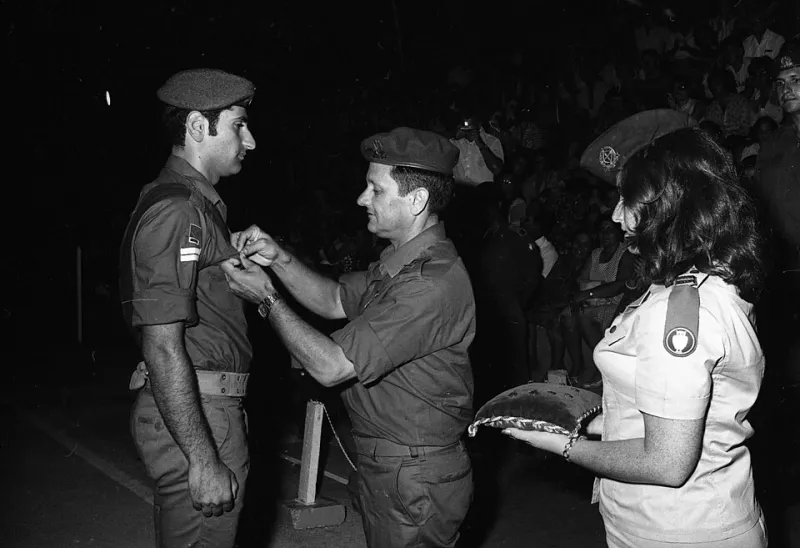
Photo: Oskar Tauber, CC BY 4.0, via Wikimedia Commons
Walk into any mid-sized American corporation today and you will encounter a familiar vocabulary: psychological safety, servant leadership, radical candor, agile sprints. These terms populate conference rooms from Austin to Boston, adorning whiteboards and slide decks with the confidence of settled science. Yet for many Sainik School alumni now working across American industries, this language describes something they learned long before they ever heard the terminology — something absorbed not through a seminar, but through years of shared hardship, collective accountability, and structured trust.
The distinction matters more than most HR departments are willing to acknowledge.
The Dormitory as Classroom
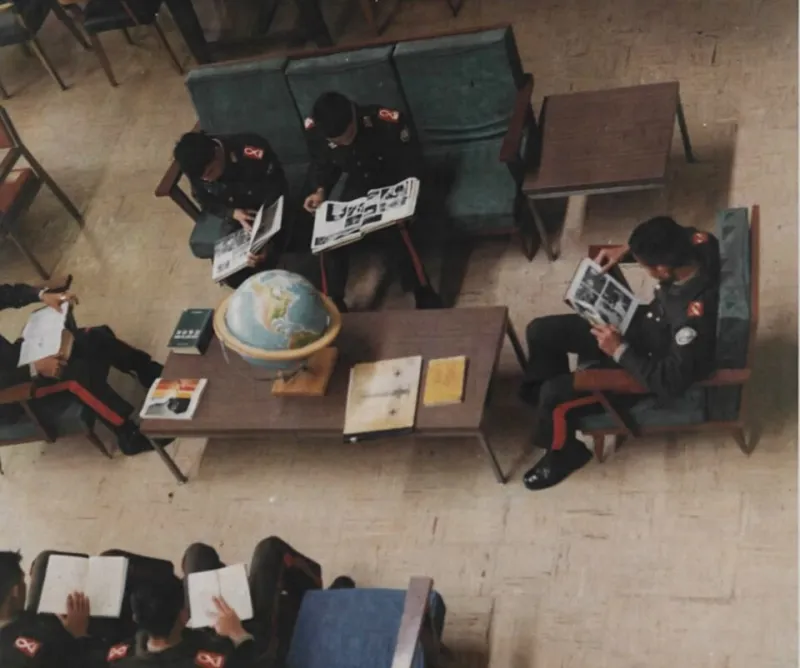
At any of India's twenty-eight Sainik Schools, a student's first and most enduring education in team dynamics begins not on a parade ground but in a dormitory. Housed together from early adolescence, cadets navigate the intimate, often demanding social architecture of communal living. Disputes must be resolved without adult mediation. Resources — from study time to athletic equipment — must be negotiated and shared. Sleep schedules, personal habits, and individual temperaments must somehow coexist within a shared physical space governed by collective standards.
This is not, as outsiders sometimes assume, merely an exercise in tolerance. It is a sustained practicum in what organizational psychologists now call relational trust — the foundational layer beneath every high-performing team. Where American corporate culture attempts to build this trust through structured icebreakers and offsite retreats, Sainik School alumni have already logged thousands of hours of it by the time they receive a diploma.
Raj Krishnamurthy, a Sainik School alumnus and currently a senior engineering director at a major technology firm in the San Francisco Bay Area, describes the contrast plainly: "My American colleagues went through team-building exercises designed to simulate vulnerability. I had already lived it — shared a bunk with someone I initially disliked, learned to rely on him anyway, and came out the other side with something real. You can't manufacture that in a Marriott conference room."
Hierarchy That Serves, Not Suppresses
One of the most consistent misreadings of military school culture in the American corporate context is the assumption that hierarchy produces rigidity. The Sainik School model, in practice, teaches something considerably more nuanced. Cadets rotate through leadership roles from their earliest years. A student who commands a platoon exercise on Tuesday may serve under a peer's command on Thursday. This rotation is not ceremonial — performance is evaluated, feedback is direct, and the consequences of poor leadership are felt immediately by the entire unit.
The result is a graduate who understands authority not as a permanent entitlement but as a contextual responsibility. This orientation translates directly into management styles that American companies pay consultants to instill. Sainik School alumni, by and large, do not confuse rank with competence. They delegate with precision, solicit dissenting views without ego, and hold subordinates accountable without resorting to the kind of micromanagement that consistently ranks among the top reasons American employees resign.
According to a 2023 Gallup survey, 50 percent of American workers who voluntarily left their jobs cited their direct manager as the primary reason. The management failures Gallup documents — inconsistent feedback, lack of recognition, failure to develop talent — are precisely the gaps that Sainik School training addresses structurally, not philosophically.
Trust as Operational Necessity
In a military school environment, trust between team members is not a cultural aspiration. It is an operational requirement. Field exercises, physical training rotations, and academic competitions all carry consequences that distribute across the group. A cadet who undermines a teammate's performance degrades the entire unit's standing. This reality instills a form of mutual accountability that is, frankly, absent from most American workplace cultures, where individual performance metrics often create incentive structures that quietly punish collaboration.
Sainik School alumni working in American corporate environments frequently report a period of adjustment — not because they struggle with the work, but because they find the team dynamics unexpectedly fragile. Where they expect shared ownership of outcomes, they encounter siloed credit-taking. Where they anticipate direct, constructive feedback, they find a culture of euphemism that obscures performance problems until they become crises.
Preeti Subramaniam, an alumna of Sainik School Amaravathinagar and now a people operations leader at a Chicago-based logistics company, describes her early experience this way: "I was surprised by how much energy went into managing perceptions rather than managing problems. In school, if your section failed a task, everyone knew it and everyone worked to fix it. There was no politics around it. That directness was actually a gift I didn't know I had until I saw what its absence looked like."
What the Data Reflects
While comprehensive studies specifically tracking Sainik School alumni in American management roles remain limited, the broader body of research on military-educated leaders offers instructive signals. A Harvard Business Review analysis found that veterans in managerial roles consistently outperform civilian counterparts on team retention and cross-functional project completion. Separate research from McKinsey has highlighted that teams with leaders who demonstrate high "relational intelligence" — the ability to read group dynamics and adjust accordingly — show measurably stronger performance outcomes.
Sainik School alumni, by the structure of their formation, develop precisely this relational intelligence. It is not a soft skill appended to their professional profile. It is the substrate upon which all other competencies rest.
Beyond the Jargon
American corporate culture has an enduring appetite for new frameworks. The language of team-building evolves with each business cycle, generating fresh acronyms and consultancy engagements. What it has not yet fully reckoned with is the possibility that the most durable team-building methodology is not a methodology at all — it is an environment. One that demands accountability, rotates authority, enforces shared consequence, and builds trust not through exercises but through years of lived interdependence.
Sainik Schools have been providing that environment for decades. The alumni who emerge from it carry no jargon, no certification, and no branded framework. What they carry is something considerably more valuable: the practiced instinct of people who have already led, already failed, already recovered, and already earned the trust of those beside them.
In a corporate landscape where team dysfunction remains one of the most expensive and persistent organizational problems, that instinct is not merely an asset. It is, increasingly, a competitive advantage that American firms are only beginning to recognize.