Passing the Torch: How Sainik School Graduates Are Shaping the Next Wave of American Military Leadership
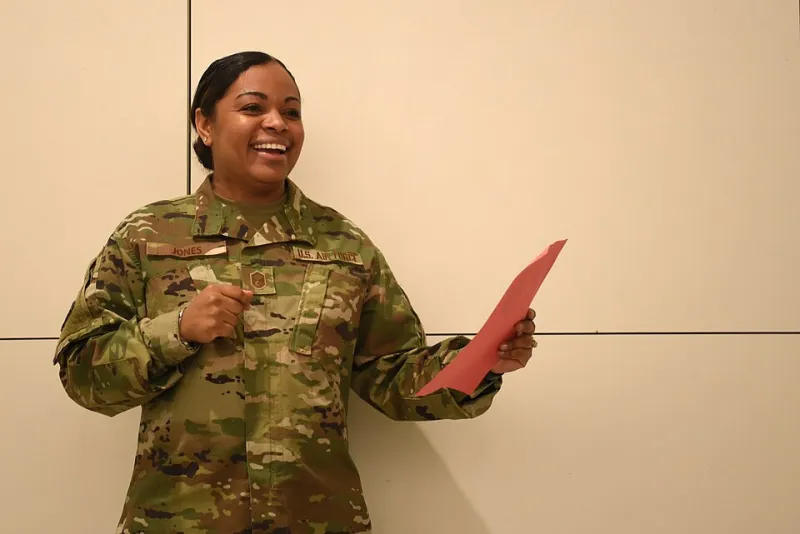
Photo: U.S. Air Force photo by Tech. Sgt. Jocelyn Ford, Public domain, via Wikimedia Commons
In the corridors of military installations from Fort Liberty to Joint Base Lewis-McChord, a quiet but consequential movement is taking shape. Sainik School alumni — officers who once drilled on parade grounds in Rajasthan, Kerala, and Himachal Pradesh before finding their way into the U.S. armed forces — are devoting deliberate energy to mentoring the next generation of American military leaders. Their methods are unconventional by American standards. Their results are increasingly difficult to ignore.
The mentorship gap these alumni are working to close is not one of technical proficiency. American military academies produce officers who are tactically sound and procedurally disciplined. What they sometimes struggle to cultivate is the kind of adaptive, character-grounded leadership that emerges from sustained adversity — the sort of formation that defines the Sainik School experience from the first year of enrollment.
An Education in Leading Through Discomfort
Sainik Schools, established across India in the 1960s with the explicit purpose of preparing young men for careers in the armed forces, operate on a foundational premise that distinguishes them from most Western military preparatory institutions: leadership is not taught in classrooms alone. It is extracted from years of communal living, rigorous physical conditioning, and the management of interpersonal conflict within a diverse residential environment.
Brigadier General Arvind Menon (Ret.), a Sainik School Amaravathinagar alumnus who spent 28 years in the U.S. Army before retiring in 2021, describes the difference plainly. "At Sainik School, you are not managing a team for a semester. You are living with that team every day, every meal, every conflict. By the time you commission, you have already made consequential leadership decisions — and you have lived with the consequences of getting them wrong."
That experiential depth, alumni argue, creates a mentoring posture that is less theoretical and more visceral — one that resonates with junior officers navigating the psychological and relational pressures of military service in ways that formal curricula rarely address.
Formal Structures, Informal Bonds
What began as informal coffee conversations and chance encounters at joint exercises has, for several Sainik School alumni, evolved into structured mentorship frameworks. Lieutenant Colonel Priya Subramaniam, currently stationed at the Pentagon and a graduate of Sainik School Kodagu, co-founded a peer mentorship circle in 2019 that pairs senior officers of South Asian descent with junior officers — regardless of background — who have been flagged by their commands as high-potential but struggling with retention risk.
"Retention is the crisis no one wants to name directly," Subramaniam says. "Junior officers leave not because they lack capability, but because they feel unseen. They feel that the institution does not have language for what they are experiencing. Part of what I bring from my Sainik School formation is the understanding that the institution will not always acknowledge your struggle — but that does not diminish the struggle, and it does not diminish you."
Her program, now operating informally across three installations, has facilitated mentorship relationships for more than 40 junior officers over five years. Exit interviews conducted by the program suggest that participants are significantly more likely to complete their service commitments than the broader officer cohort at the same installations.
The Cross-Cultural Advantage
For American-born officers who have come under the mentorship of Sainik School alumni, the cross-cultural dimension is frequently cited as one of the most valuable — and unexpected — aspects of the relationship.
First Lieutenant Marcus Webb, a West Point graduate currently serving in the 82nd Airborne Division, has been mentored informally by Colonel Rajesh Iyer, a Sainik School Bijapur alumnus, for nearly two years. Webb describes his initial skepticism and subsequent conversion with characteristic candor.
"I came into this thinking, what is a guy who went to school in India going to teach me about the U.S. Army? That was my mistake. Colonel Iyer helped me understand that leadership is not about the institution you attended — it is about what the institution demanded of you. And what Sainik School demanded of him is something West Point never demanded of me."
Iyer, for his part, frames the mentorship as a reciprocal education. "I learn from Marcus every time we speak. He challenges me to articulate things I have always done instinctively. The process of explaining my formation to someone who did not share it has made me a more deliberate leader."
What the American Military Academy Model Leaves Unaddressed
This is not an argument that American military academies are failing. West Point, Annapolis, and the Air Force Academy continue to produce officers of exceptional quality. The Sainik School alumni engaged in mentorship work are careful to make this distinction. Their contention is narrower: that certain dimensions of leadership formation — particularly those involving emotional endurance, communal accountability, and the navigation of institutional disappointment — receive insufficient formal attention in the American system.
"The American military academy model is excellent at producing officers who can execute," observes Dr. Sunita Krishnamurthy, a defense policy researcher at Georgetown University who has studied the professional trajectories of South Asian-born U.S. military officers. "What Sainik School alumni appear to offer, anecdotally at least, is a mentorship vocabulary for the interior life of an officer — the doubt, the moral injury, the question of whether the institution deserves your continued loyalty. Those are not conversations that happen easily in a culture that prizes stoicism."
Building Something That Lasts
The alumni involved in this work are not operating with formal institutional backing, at least not yet. Their programs exist in the interstitial spaces of military life — in off-duty hours, in personal correspondence, in the kind of relationship-building that does not appear on any official development plan. Several have expressed hope that the Sainik School Society and its affiliated networks might eventually provide a more structured platform for connecting alumni mentors with officers who could benefit from their guidance.
"What we are doing now is artisanal," admits Subramaniam, with a measured smile. "It works because we care, not because we have infrastructure. But if we are serious about this — if we believe that what Sainik School gave us has genuine value for the American military — then we owe it to the next generation to build something more durable."
The mentorship gap is real, and the officers working to close it are doing so with the same quiet determination that has characterized Sainik School graduates across every field they have entered. Whether the American military establishment will formalize what these alumni have already begun building informally remains an open question. What is not in question is the quality of what is being offered — or the urgency of the need it addresses.