Capital Meets Conviction: How Military School Pedigrees Are Reshaping Venture Capital's Risk Calculus

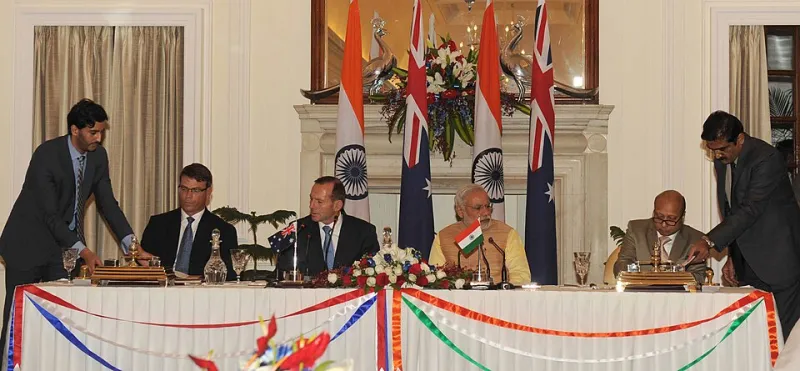
Photo: Mark Neyman, CC BY-SA 3.0, via Wikimedia Commons
The mythology of the venture-backed founder has long been dominated by a particular archetype: the college dropout in a hoodie, operating on instinct and caffeine, pitching a vision so audacious it borders on delusional. Silicon Valley built an entire culture around that image. But inside the offices of some of the most competitive investment firms in New York, Austin, and the Bay Area, a different profile is quietly accumulating a remarkable track record — the Sainik School alumnus.
What began as a trickle of diaspora entrepreneurs building technology and defense-adjacent companies has matured into a recognizable pattern. Investors who have backed Sainik School graduates describe a consistency of execution that stands apart from the broader startup ecosystem. These are not founders who pivot on sentiment or crumble when a funding round falls through. They are, as one general partner at a mid-stage venture firm put it, "operators who have already rehearsed catastrophe."
The Risk Framework That Military Schools Actually Teach
To understand why Sainik School alumni are gaining credibility in venture circles, it helps to understand what the institution actually produces. Sainik Schools, established across India to prepare young men and women for careers in the armed forces, are not simply boarding schools with military aesthetics. They are environments designed to strip away comfort systematically — to replace instinctive self-preservation with deliberate, mission-oriented reasoning.
The curriculum demands early accountability. Students manage structured responsibilities from adolescence, operate within hierarchies that reward competence over seniority, and learn to make consequential decisions with incomplete information. That last quality, in particular, is one that venture capitalists spend considerable energy trying to identify in founders. Startups are, by definition, exercises in navigating ambiguity. The question investors ask is not whether a founder can handle certainty — it is whether they can function, and lead, when the ground shifts beneath them.
Sainik School graduates have answered that question long before they ever walk into a pitch meeting.
From Portfolio Theory to Portfolio Companies
The influence of this alumni cohort is being felt on both sides of the cap table. As founders, Sainik School graduates are building companies in sectors that demand precisely the attributes their training instilled: cybersecurity, logistics technology, defense contracting, and enterprise software serving regulated industries. These are not spaces where a founder can afford to be sloppy about unit economics or cavalier about compliance. They require the same methodical discipline that a cadet applies to field operations.
Consider the profile of alumni-led companies that have attracted Series A and Series B financing in the United States over the past five years. Several have built platforms serving the defense and intelligence communities, where the ability to earn institutional trust is as important as technical capability. Others have entered the supply chain and critical infrastructure space, where resilience engineering — a concept any Sainik School graduate understands viscerally — is not a selling point but a baseline requirement.
Perhaps more striking is the growing number of Sainik School alumni who have crossed to the investor side. Several graduates now hold partner or principal roles at venture firms, where their backgrounds inform not just deal sourcing but due diligence methodology. They ask different questions than their peers. They probe for operational depth rather than surface-level narrative. They are skeptical of founders who cannot articulate failure modes. And they tend to be particularly attentive to team cohesion — a dimension of startup health that many investors underweight until it becomes a crisis.
Why American VCs Are Paying Attention
The American venture capital community has spent the better part of a decade grappling with the failure rate of founder-led companies that looked exceptional on paper. The problem, as post-mortems repeatedly reveal, is rarely the idea. It is the character of the person executing it — specifically, how that person behaves when the company faces genuine adversity.
That is the gap that Sainik School alumni appear to fill with unusual reliability. Investors who have backed multiple graduates describe a common behavioral signature: measured communication under pressure, an instinct for preserving team morale without sacrificing transparency, and a willingness to make hard calls early rather than allowing problems to compound. These are traits that business schools attempt to cultivate through case studies and simulations. Military schools cultivate them through lived experience.
One venture partner at a firm with offices in San Francisco and Washington, D.C., described the dynamic plainly: "We look for founders who have been tested. Not stressed — tested. There's a difference. Stress is a bad quarter. Being tested is when the entire premise of your operation is challenged and you have to hold the team together anyway. Sainik School guys have been through that version of tested before they're eighteen."
The Network Effect That Compounds Over Time
Beyond individual founder quality, there is a structural advantage embedded in the Sainik School alumni network that American investors are beginning to recognize. The bonds formed in those institutions — through shared hardship, institutional pride, and a culture of mutual obligation — create a form of social capital that translates directly into business utility.
For a founder navigating early customer acquisition, a fellow alumnus in a position of procurement authority is not merely a contact. It is a relationship built on years of demonstrated trust. For a fund manager sourcing deals, the alumni network functions as a pre-vetted pipeline of operators whose character has already been assessed by an institution with exacting standards.
This is not nepotism. It is the rational deployment of verified social trust — precisely the kind of durable, character-based networking that the Sainik School Society has long championed as central to the institution's enduring value.
A New Standard for What Founders Can Be
The venture capital industry is, at its core, in the business of betting on people. Every investment thesis, every market analysis, every financial model is ultimately a secondary consideration to the judgment that a specific person or team can be trusted to navigate the unknown. The institutions that have historically supplied that kind of person — elite universities, storied consulting firms, marquee tech companies — are being joined by a new entrant.
Sainik Schools did not design their curriculum to produce venture-backed entrepreneurs. They designed it to produce officers. But the qualities that make an exceptional officer — composure, integrity, mission clarity, team-first orientation — turn out to map with remarkable precision onto the qualities that make an exceptional founder.
American venture capital is beginning to notice. The alumni of India's military schools are not waiting to be discovered. They are building companies, raising funds, and demonstrating, quarter by quarter, that the most durable competitive advantage a founder can carry into a boardroom is not a Stanford degree or a prior exit. It is character — forged early, tested repeatedly, and impossible to manufacture on demand.