Forged to Bend, Not Break: How Sainik School Alumni Turn Adversity Into Career Capital

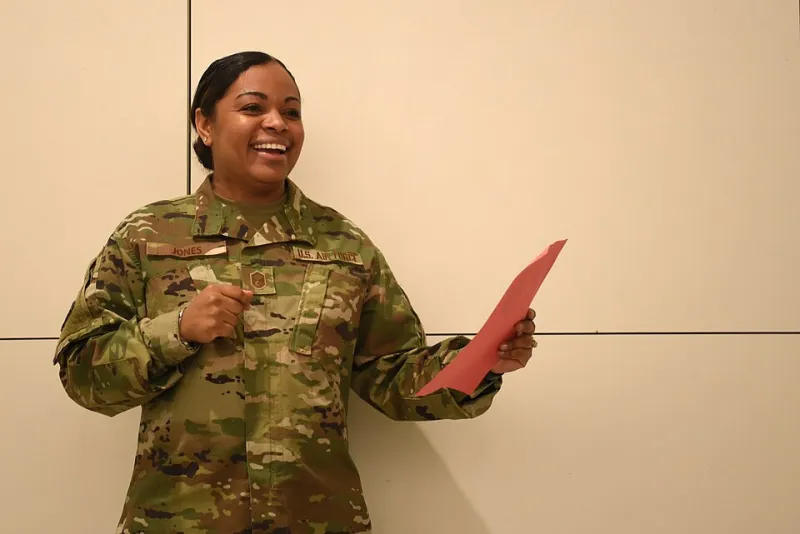
Photo: United States Air Force (User:Pmsyyz converted from JPEG to PNG, added transparency, indexed color), Public domain, via Wikimedia Commons
There is a particular kind of silence that follows professional failure. It is the silence of a shuttered office, a severance letter, a board vote that does not go your way. For most people, that silence is paralyzing. For a growing cohort of Sainik School alumni now working across American industries—from Silicon Valley to Wall Street, from defense contracting firms in Northern Virginia to healthcare systems in the Midwest—that silence is merely the opening of a familiar drill.
They have been here before. Not in the specifics, perhaps, but in the essential structure: the sudden removal of certainty, the demand for composure under conditions that do not reward composure, and the requirement to act decisively when the path forward is anything but clear. Sainik School did not promise its students a life without difficulty. It promised them something far more valuable—the capacity to move through difficulty without losing themselves in it.
The Architecture of Adversity Training
To understand why Sainik School graduates respond to setbacks differently, one must first understand what those schools actually do to a young person over the course of six formative years. Established under the auspices of the Indian government in the early 1960s with the express purpose of preparing young men for the National Defence Academy, Sainik Schools operate on a model that is simultaneously rigorous and relational. Students are removed from their comfort zones at an early age, placed in structured residential environments, and asked to perform—academically, physically, and socially—under sustained pressure.
What emerges from this environment is not simply discipline, though discipline is certainly part of it. What emerges is a deeply internalized understanding that failure is not a terminal condition. It is, rather, data. Senior alumni who now occupy prominent positions in American corporate life frequently describe a foundational mindset shift that occurred not in a boardroom or a business school classroom, but on a parade ground in India at the age of thirteen—the moment they understood that falling short of a standard was not an indictment of character but an instruction about where to direct effort.
When the Startup Dies
Consider the experience of alumni who have navigated the particularly brutal terrain of American startup culture. The United States produces more venture-backed companies than any nation on earth, and it destroys most of them. The psychological toll of a startup failure—the loss of capital, reputation, and sometimes friendships—is well-documented. Therapists in San Francisco and Austin have built entire practices around it.
Sainik School alumni who have lived through startup collapses describe a response pattern that diverges sharply from the norm. Rather than retreating into shame or defensiveness, they tend to engage in what might be called structured post-mortems—a habit that mirrors the after-action review culture embedded in military training. The question is not "why did this happen to me" but "what did the situation reveal, and what do I do with that information."
This is not emotional suppression. It is emotional architecture. The school's residential model, which placed students in close quarters with peers from vastly different socioeconomic and regional backgrounds, demanded a particular kind of emotional regulation—the ability to process frustration, disappointment, and interpersonal conflict without allowing those experiences to degrade collective performance. That same regulation, alumni report, becomes an extraordinary asset when a company fails and the founder must decide, often within days, how to communicate with investors, employees, and the broader professional community.
The Corporate Demotion and the Long Game
Not every setback arrives with the drama of a collapsed venture. Some of the most psychologically corrosive professional experiences are quieter—the promotion that goes to someone else, the reorganization that sidelines a promising executive, the industry disruption that renders a hard-won skill set suddenly obsolete. These are the setbacks that tend to corrode confidence slowly, over months and years.
Here again, alumni of India's military schools describe a distinct orientation. The Sainik School model places enormous emphasis on institutional loyalty and long-term perspective. Students are taught, explicitly and implicitly, that personal advancement is secondary to the health of the unit—and that the unit, properly understood, extends far beyond any single posting or assignment. Translated into corporate terms, this means that alumni tend to evaluate career setbacks against a longer timeline than their peers might.
Where a conventional professional might interpret a demotion as evidence of ceiling, a Sainik School graduate is more likely to interpret it as a signal about organizational dynamics—information to be analyzed, not a verdict to be internalized. Several alumni now in senior roles at American companies have described deliberately taking lateral or even downward moves at critical junctures, not as concessions but as strategic repositioning. The willingness to absorb short-term loss of status in service of longer-term positioning is, they argue, a direct inheritance from a school culture that never confused rank with worth.
Practical Frameworks Worth Borrowing
For American professionals who did not have the benefit of a Sainik School education, the resilience strategies employed by these alumni are not entirely inaccessible. Several principles emerge consistently from conversations with graduates navigating adversity:
Separate the event from the identity. Military training insists on clear-eyed assessment of what happened, divorced from ego. The habit of asking "what failed" rather than "am I a failure" is learnable and transferable.
Maintain physical discipline during psychological disruption. Sainik School graduates almost universally report that physical routines—running, exercise, structured sleep—serve as stabilizing anchors during periods of professional chaos. The body, they argue, is the first line of psychological defense.
Activate the network with honesty, not spin. The Sainik School alumni network operates on a culture of candor. When graduates reach out to peers during difficult periods, they do so with transparency about what went wrong. This stands in contrast to the performative optimism that often characterizes American professional networking, and it tends to produce more substantive support.
Define the next mission before the current one ends. One of the most consistent patterns among alumni navigating transitions is a forward-orientation that takes hold even before a setback is fully resolved. The military habit of planning the next operation while executing the current one translates, in civilian life, into an ability to pursue new opportunities without waiting for the psychological dust to settle entirely.
Resilience as Institutional Legacy
The Sainik School Society exists, in part, to ensure that the lessons forged in those residential academies do not dissipate when graduates enter civilian or American professional life. The alumni network serves not merely as a social infrastructure but as a living repository of hard-won institutional knowledge—including the knowledge of how to fail well.
In an American professional culture that frequently mythologizes resilience while providing few genuine frameworks for cultivating it, the Sainik School model offers something rare: a proven, structured approach to adversity that has been tested not in a corporate retreat or a business school case study, but in the demanding crucible of military education. The graduates who carry that education into American boardrooms, hospital systems, and technology firms are not simply successful professionals. They are, in a meaningful sense, proof of concept.
And when the next crisis comes—as it always does—they will be ready.