Schooled by Setback: The Failure Curriculum That Sainik Schools Mastered Long Before Business Education Caught On
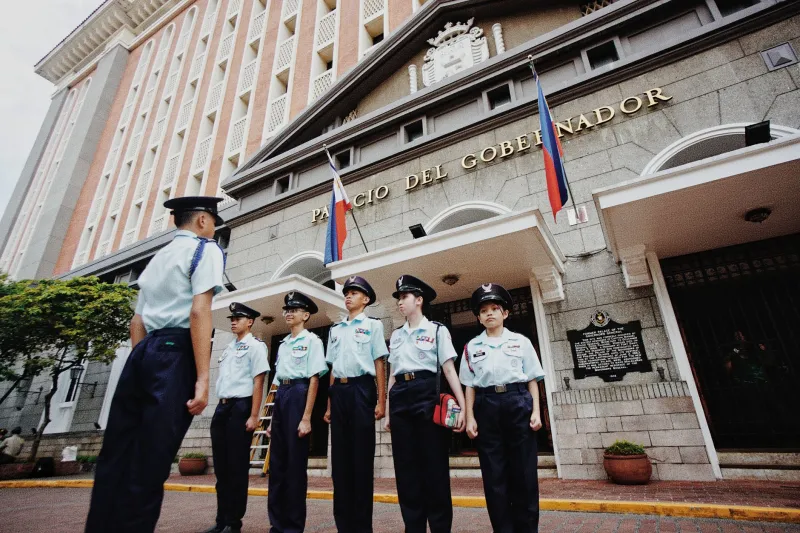
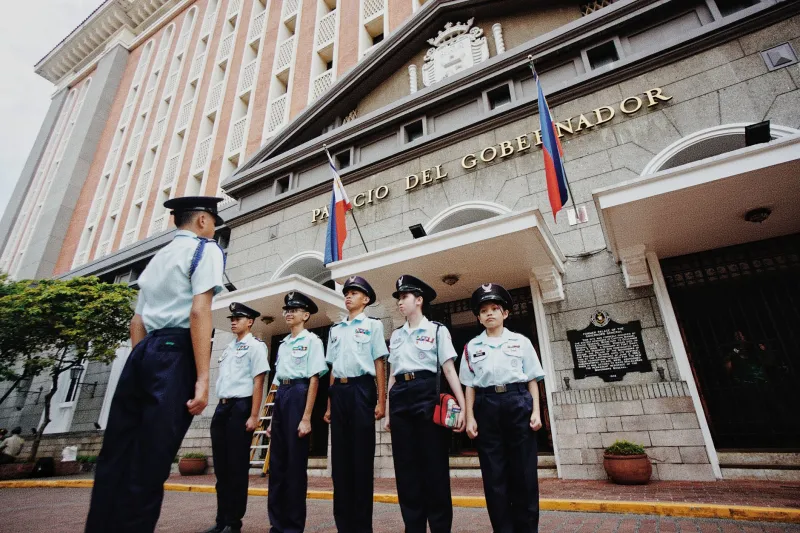
There is a particular moment that nearly every Sainik School alumnus can recall with unsettling precision. It is not the moment of triumph — the commission earned, the examination passed, the leadership billet secured. It is the moment of public failure: the drill command delivered incorrectly in front of three hundred peers, the academic result posted on a board for all to read, the leadership rotation that ended in a measured but unsparing debrief from a superior who had no interest in protecting anyone's self-image. That moment, repeated in various forms across years of institutional life, is not incidental to the Sainik School experience. It is the curriculum.
And it is the curriculum that no American business school, regardless of its endowment or its faculty pedigree, has yet found a way to replicate at scale.
The Sanitized Failure of the Modern MBA
To understand what Sainik Schools accomplish, it is worth examining what elite business education in the United States does not. The MBA experience, particularly at the institutions that command the highest tuitions and the most prestigious recruiting pipelines, is carefully engineered to simulate difficulty without imposing genuine consequence. Case studies present failure as historical artifact — something that happened to Kodak or Blockbuster, entities safely distant from the student's own identity and ambition. Group projects create the appearance of collaborative pressure while grading curves ensure that almost no one is permitted to truly fall short.
The failure narratives that do surface in business school classrooms are, almost without exception, retrospectively redeemed. The entrepreneur who lost everything and rebuilt. The executive who was fired and then rehired at twice the salary. The message, however unintentionally transmitted, is that failure is a prelude to a better story — not a condition to be metabolized in real time, under observation, without the comfort of narrative resolution.
Graduates of these programs enter organizations equipped with frameworks for analyzing failure from a distance. They are considerably less equipped to sit inside it.
What Sainik Schools Actually Do
The Sainik School model operates on a fundamentally different premise. Failure, within these institutions, is not a cautionary tale. It is a scheduled event.
The competitive examination structure that governs academic life at Sainik Schools creates a continuous feedback loop in which relative standing is never obscured. Results are not buffered by participation-oriented assessment or grade inflation. A cadet who performs poorly knows it, and so does everyone around him. This is not cruelty by design — it is clarity by design. The institutional logic holds that a young person who learns to face an honest accounting of his performance at fourteen is better prepared to face one at forty-four, when the stakes involve not examination marks but quarterly earnings, operational failures, or command decisions with irreversible consequences.
Leadership rotations deepen this conditioning. Sainik School cadets cycle through positions of responsibility — house captain, drill leader, academic monitor — on schedules that are not determined by personal readiness. They are placed in charge before they feel ready, evaluated on results they do not fully control, and debriefed in terms that prioritize institutional learning over individual comfort. The debrief, in particular, is an instrument that American organizational culture has largely abandoned in favor of performance reviews that emphasize encouragement and forward momentum. At Sainik Schools, the debrief is a rigorous post-mortem: what failed, why it failed, and what the individual in the leadership role will do differently. There is no requirement that the conversation feel good.
Failure as Data, Not Defeat
The executives and officers who emerge from this environment share a cognitive orientation toward setback that is genuinely distinct from what their peers in corporate America typically exhibit. Alumni consistently describe a mental reflex — developed over years of institutional conditioning — that converts failure from an emotional event into an analytical one. When a product launch collapses, when a strategic initiative is defunded, when a team underperforms against targets, the instinct trained at Sainik School is not to assign blame or seek reassurance. It is to gather information.
This orientation has measurable organizational value. In environments where failure is treated as evidence of inadequacy, teams conceal problems until they become crises. Leaders who have never been trained to metabolize setback in real time tend to respond to organizational difficulty with either paralysis or premature pivoting — neither of which serves the institution. The executive who has been publicly accountable for failure since adolescence brings a different posture to the same situation: steadiness, analytical curiosity, and an absence of the ego-protection instinct that causes so many organizational problems to fester in silence.
The American Leadership Gap
This distinction matters particularly in the current American corporate environment, where the premium on psychological safety — a concept of genuine value when correctly applied — has in some organizations drifted toward an aversion to honest accountability. When feedback is perpetually softened and failure is consistently reframed as learning opportunity before it has been honestly examined, organizations lose the diagnostic capacity that honest failure provides.
The Sainik School approach does not reject psychological safety. It sequences it differently. Safety, within the military school framework, is built on demonstrated competence and shared accountability — not on the assurance that difficult truths will be withheld. Cadets develop genuine confidence not because they are protected from failure, but because they have failed, survived, been evaluated honestly, and continued. That sequence, repeated across years, produces a form of psychological durability that is qualitatively different from the confidence cultivated in environments where failure is rarely permitted to land with full weight.
What Policy and Institutional Leaders Should Take From This
For those engaged in designing leadership development programs — whether within American military academies, corporate leadership pipelines, or public policy institutions — the Sainik School model offers a structural argument rather than merely an inspirational one. The argument is this: resilience is not a trait to be discovered through self-reflection or a workshop. It is a capacity built through repeated, consequential, honestly-evaluated exposure to falling short.
The institutional practices that produce this outcome are not exotic. They require competitive structures with transparent results, leadership rotations that precede personal readiness, and debriefs that prioritize accuracy over comfort. What they require above all is an institutional willingness to allow failure to be real — not softened, not redeemed prematurely, and not treated as an event to be managed rather than metabolized.
American business education has begun, in recent years, to take resilience seriously as a curricular objective. The conversation is worthwhile. But the Sainik School record suggests that the institutions which will produce genuinely resilient leaders are not those that add a resilience module to an otherwise insulated curriculum. They are the institutions that build the experience of honest failure into the architecture of daily life — and trust their students to grow through it.
That trust, extended consistently over years, is the invisible curriculum. And it is worth considerably more than the tuition required to study it from a distance.