The Reluctant Mentors: How Sainik School Alumni Became the Most Sought-After Guides in Rooms They Never Planned to Enter
There is a particular kind of mentor who never announces himself. He does not maintain a personal branding newsletter about leadership philosophy. He does not speak at panels on the mechanics of sponsorship. He simply identifies something in a younger colleague that the colleague has not yet identified in himself — and then, with quiet precision, he begins to build it.
Across corporate America, in technology firms, investment banks, defense contractors, and nonprofit institutions, a disproportionate number of these unassuming but transformative mentors share a common thread: they are graduates of India's Sainik Schools — a network of residential military preparatory schools established to cultivate the next generation of armed forces officers. What these schools produced, it turns out, was something far broader than military candidates. They produced people who instinctively know how to make other people better.
A System Built on Passing It Down
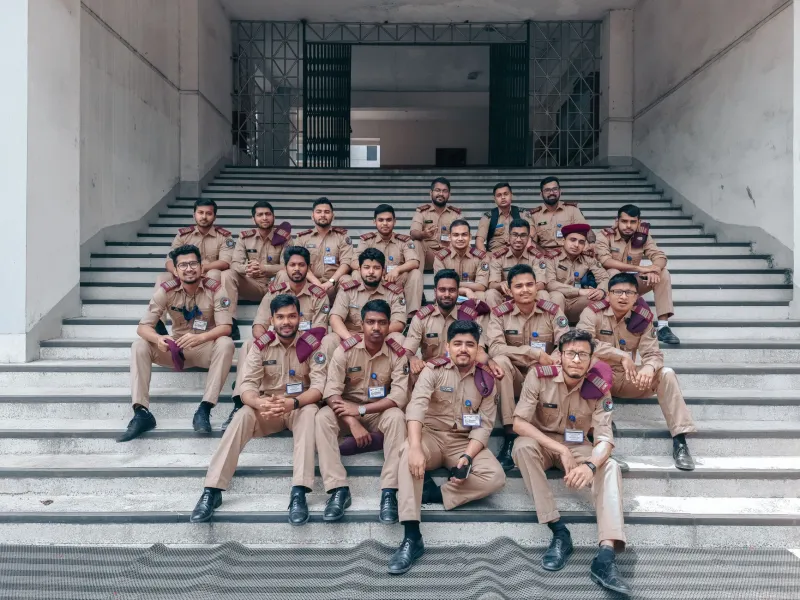
To understand why Sainik School alumni mentor the way they do, one must first understand the institutional architecture that shaped them. Unlike conventional boarding schools, Sainik Schools operate on a rigorous hierarchical model in which senior students bear formal responsibility for the development of their juniors. This is not symbolic. Prefects and house captains are evaluated, in part, on the performance and conduct of the cadets beneath them. Leadership is not a reward granted at graduation — it is practiced daily, beginning as early as age thirteen.
Colonel Rajiv Menon (Ret.), a Sainik School Bijapur alumnus who later served in the Indian Army before emigrating to the United States and joining a prominent defense consultancy in Northern Virginia, recalls the weight of that responsibility with clarity. "When I was a senior cadet, my performance review was tied to how my juniors were doing. If a younger boy was struggling with physical training or falling behind academically, that was a reflection on me. I had to figure out why, and I had to fix it. Not for his sake alone — for mine."
That accountability loop — so foreign to most American educational models — created something durable. It trained young men not merely to lead, but to observe, diagnose, and intervene on behalf of someone else's potential.
Mentorship as Muscle Memory
Priya Suresh, a Sainik School Amaravathinagar alumna and now a senior partner at a management consulting firm in Chicago, uses the phrase "muscle memory" when describing her mentorship instincts. "In school, you learned to read people quickly. You had to. You were responsible for the welfare of younger students, and you couldn't wait for someone to tell you there was a problem. You developed a sensitivity to early signals — a cadet who was withdrawing, one who was overreaching, one who had ability but no confidence. You learned to see what wasn't being said."
Suresh has since built a reputation at her firm as someone who identifies high-potential associates before their performance metrics would suggest it. Three of her mentees have been promoted ahead of their peer cohorts in the last four years. She credits none of this to any formal mentorship training she received as a professional. "Everything I know about developing people, I learned before I turned eighteen," she says without a trace of irony.
The Unexpected Contexts
What makes the Sainik School mentorship model particularly striking is how effectively it transfers across fields that bear no surface resemblance to military education. Alumni report exercising the same instincts in creative industries, academic institutions, and early-stage startup environments — places where the conventional wisdom holds that mentorship is informal, organic, and largely ad hoc.
Arun Krishnamurthy, a Sainik School Sujanpur alumnus who now leads a product design team at a mid-sized technology company in Austin, Texas, describes his approach to junior designers in terms his Sainik School commandant might have recognized. "In the school, there was a concept of identifying a cadet's 'edge' — the specific quality that, if sharpened, would make him exceptional. My job as a senior was to find that edge and then create the conditions for it to develop. I do the same thing with my team. I'm not trying to make everyone good at everything. I'm trying to find the one thing that could make each person irreplaceable, and then I protect the space for that thing to grow."
This targeted, individualized approach distinguishes Sainik School alumni from mentors who rely on generalized frameworks or motivational principles. Their methodology is observational first, prescriptive second — a sequence that many American corporate mentorship programs invert.
What American Mentorship Models Miss
The contrast with prevailing American mentorship culture is instructive. In most U.S. organizations, mentorship is voluntary, episodic, and driven by the mentee's initiative. The mentor is positioned as a resource to be accessed rather than a guide with an active obligation to identify and develop potential. This model places the entire burden of self-advocacy on the junior party — a burden that disproportionately disadvantages those who are less networked, less confident, or less fluent in the unwritten codes of professional advancement.
Sainik School alumni, by contrast, were trained to be proactive in the development of others. They do not wait to be approached. They approach. This seemingly small difference in orientation produces dramatically different outcomes, particularly for mentees who might otherwise fall through the cracks of a passive system.
Dr. Meena Nair, a Sainik School alumna and organizational psychologist based in Washington, D.C., has studied mentorship effectiveness across military and civilian contexts. Her research suggests that alumni from structured hierarchical institutions consistently outperform their peers on metrics of mentee retention, promotion rates, and long-term career satisfaction. "The data points to a simple truth," she notes. "The best mentors are not the ones who are most accomplished. They are the ones who were trained to be responsible for someone else's growth before they were trained to pursue their own."
The Society's Role in Sustaining the Model
For the Sainik School Society, the mentorship legacy of its alumni community represents both a point of institutional pride and an active area of investment. The Society's alumni network functions as a formal channel through which graduates can connect with younger professionals navigating career transitions, graduate school applications, or the particular challenges of building a life in the United States while honoring an identity forged in India's military educational tradition.
This network does not merely connect people — it replicates the conditions that made Sainik School mentorship effective in the first place. Senior alumni take on formal responsibility for the development of their juniors. Accountability is built into the relationship from the outset. The mentee is not a passive recipient of wisdom; he or she is a project, in the most respectful sense of the word.
Conclusion: The Mentor Nobody Expected
The Sainik School alumnus who becomes an exceptional mentor is, in a sense, simply doing what he was trained to do from adolescence. The context has changed — the parade ground replaced by the open-plan office, the junior cadet replaced by the first-year analyst — but the underlying act remains the same. See the potential. Name it. Build the conditions for it to flourish. Accept responsibility for the outcome.
In a professional landscape saturated with mentorship programs that produce little measurable development, that orientation is rarer and more valuable than it might appear. And for those fortunate enough to encounter a Sainik School alumnus in a mentoring capacity, the experience tends to be, by all accounts, unlike anything they expected — and precisely what they needed.