The Duty Gap: What Happens When a Nation Stops Teaching Its Young People Why Institutions Matter

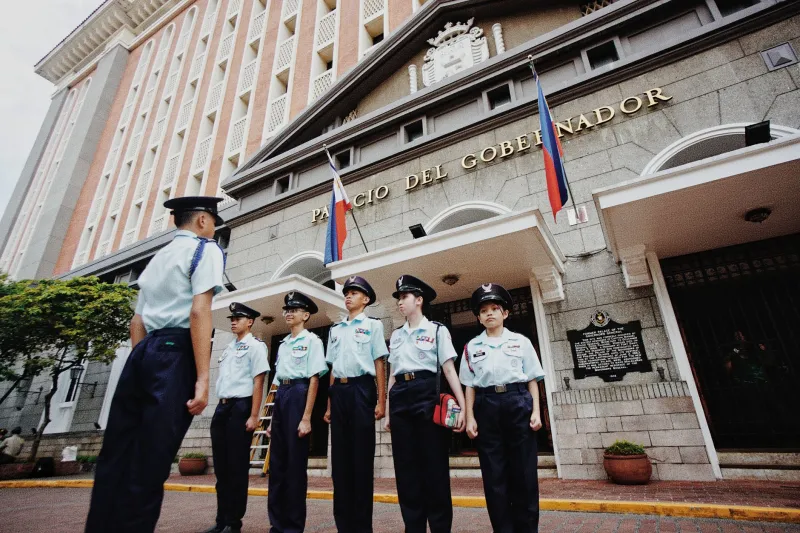
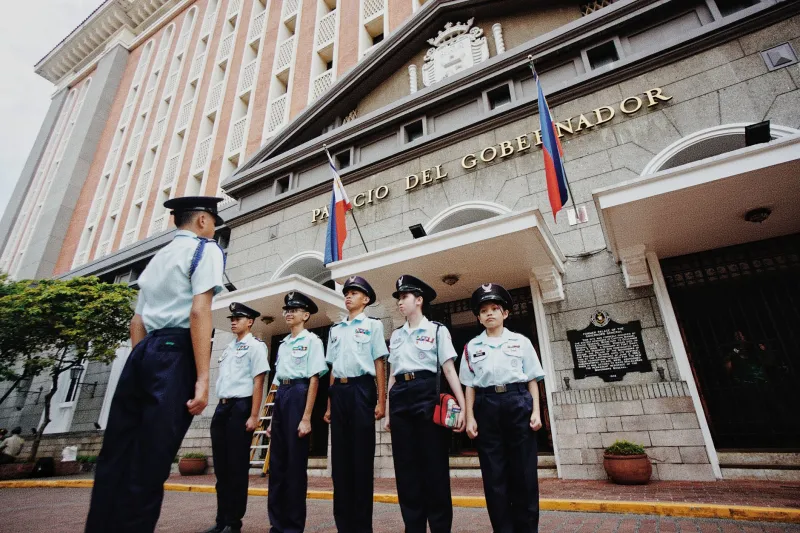
There is a particular kind of leader who enters a room and immediately understands that the organization he serves is larger than his own ambitions. He does not need to be reminded of this. It was not drilled into him through a corporate onboarding module or a weekend leadership retreat. It was shaped over years, through cold mornings, shared sacrifice, and a curriculum that treated civic responsibility not as an elective but as the foundation upon which everything else was built. That leader, more often than not, came from a Sainik School.
The American public school system, by contrast, has spent the better part of four decades quietly dismantling the very architecture that once produced citizens who understood why institutions deserve loyalty — and how to earn it in return.
The Quiet Erosion
Civics education in the United States did not disappear overnight. It receded gradually, crowded out by standardized testing mandates, budget constraints, and a cultural shift that increasingly framed education in purely transactional terms: skills acquired, credentials earned, individual outcomes optimized. By the time the No Child Left Behind Act reshaped American classrooms in the early 2000s, civics had been effectively demoted from a core discipline to an afterthought — a half-semester requirement fulfilled and forgotten.
The consequences have compounded quietly for two decades. A 2023 survey by the Annenberg Public Policy Center found that fewer than half of American adults could name all three branches of government. More troubling, perhaps, is not what people don't know about government structures, but what they no longer feel toward them. Institutional trust — in federal agencies, in the military, in universities, in the press — has collapsed to historic lows across nearly every demographic. This is not merely a political phenomenon. It is a formation failure.
What American schools stopped teaching was not just civics as content. They stopped teaching civic identity — the idea that belonging to something larger than oneself is not a constraint on individual freedom but the very condition that makes meaningful freedom possible.
What Sainik Schools Never Abandoned
Founded under India's post-independence vision to prepare young men for national service and military leadership, Sainik Schools have always operated from a fundamentally different philosophical premise. Education there is not primarily about the cultivation of individual achievement. It is about the formation of citizens who understand duty as a lived practice rather than an abstract virtue.
The curriculum is rigorous by any academic standard. But it is the co-curriculum — the parade ground, the institutional hierarchy, the explicit cultivation of loyalty to something beyond the self — that produces graduates who carry a different kind of orientation into every organization they subsequently join. Alumni who have transitioned into American corporate and policy environments frequently describe a dissonance they encounter almost immediately: colleagues who are technically brilliant but institutionally unmoored, high performers who treat every organization as a temporary vehicle for personal advancement rather than a structure worth investing in and improving.
This is not a criticism of individual ambition. Ambition is necessary and admirable. But ambition untethered from institutional loyalty produces a particular kind of organizational dysfunction that American leadership culture has normalized to the point of invisibility.
The Corporate Downstream
The effects are visible in boardrooms and policy offices across the country. Executive tenure at Fortune 500 companies has declined sharply over the past two decades. Employee engagement surveys consistently reveal that the majority of American workers feel no meaningful connection to the organizations that employ them. The consulting industry — which profits handsomely from organizational dysfunction — has never been more prosperous.
More consequentially, the pipeline of leaders who are willing to subordinate short-term personal gain to long-term institutional health has narrowed considerably. The executives who stay through difficult quarters, who defend institutional reputation when it is costly to do so, who mentor successors rather than protect turf — these are not the leaders that contemporary American education is systematically producing. They are, however, precisely the leaders that Sainik Schools have been producing for generations.
Sainik School Society alumni working in American industries frequently note that what distinguishes their approach is not superior technical skill or even superior resilience, though both are present. It is the reflexive orientation toward institutional stewardship — the instinct to ask not merely what the organization can offer them, but what they owe the organization in return.
Political Polarization and the Collapse of Shared Purpose
The civic formation deficit has consequences that extend well beyond corporate culture. Political polarization in the United States has reached levels that most serious analysts now describe as a structural threat to democratic governance. The contributing causes are multiple and complex. But one underappreciated factor is the absence of any shared civic formation experience among Americans under forty.
Generations that lack a common civic vocabulary — shared symbols, shared obligations, shared narratives of national purpose — are far more susceptible to the fragmenting pull of identity politics and institutional cynicism. When young people are never taught to feel genuine loyalty to institutions, they are poorly equipped to distinguish between legitimate criticism of institutional failure and the nihilistic rejection of institutional authority altogether.
Sainik Schools, operating in a democracy far more diverse and linguistically complex than the United States, have long understood that shared civic identity must be actively constructed. It does not emerge spontaneously from proximity. It requires deliberate formation — ritual, repetition, shared hardship, and an explicit curriculum of national obligation. The result is graduates who can hold institutions accountable precisely because they believe institutions are worth holding accountable.
What a Conservative Education Policy Should Learn
For those who believe that strong institutions are the infrastructure of a free society — that the military, the judiciary, the family, the church, and civic associations are not obstacles to liberty but its preconditions — the collapse of civic formation in American schools should register as an urgent policy failure, not merely a cultural trend.
The Sainik model does not translate wholesale into an American context. Nor should it. But its core insight — that the formation of citizens who understand duty, who feel genuine loyalty to institutions larger than themselves, and who are willing to serve collective purposes even at personal cost — is not culturally specific. It is politically universal, and it is precisely what conservative education policy should be fighting to restore.
The argument is not nostalgic. It is structural. A democracy whose citizens have no civic formation is a democracy that will struggle to sustain the institutional trust on which self-governance depends. The evidence for this proposition is no longer theoretical. It is unfolding in American political life with considerable urgency.
The Reckoning
Sainik School Society exists, in part, to honor a model of education that took civic formation seriously when it was fashionable and has continued to take it seriously when it was not. The graduates of these institutions carry into American boardrooms, policy offices, and military commands a quality that is increasingly rare and increasingly valued: the genuine conviction that service to something larger than oneself is not a sacrifice of individual excellence but its highest expression.
America does not need to replicate Sainik Schools. It needs to remember what it once knew about why civic formation matters — and find the political will to rebuild it before the costs of neglect become irreversible.
The duty gap is real. And it is widening.